
HAIL TO THE CHIEF : Governing During Challenging Financial Times
Do these scenarios sound familiar?
§ A severe financial crisis resulted in the failure of thousands of savings institutions at a cost of hundreds of billion of dollars to the American taxpayer.
§ The domestic budget deficit ballooned as a bailout plan was enacted and the government was forced to repay insured depositors at the failed institutions.
§ A government asset management company was created to buy bad assets from failed (and failing) institutions and charged with liquidating these underwater loans and investments over time in an orderly manner.
§ The domestic economy had moved into recession as a result of the financial crisis and a continued slowdown in the housing sector.
§ In the ensuing presidential election, a relative unknown, young Democrat ousted the more experienced Republican.
§ The President-elect gained support through his charismatic personality, excellent communication skills, and well-articulated message of “hope,” despite some concerns about his prior affiliations.
§ With early foreign policy successes in Iraq long forgotten, a president named George Bush prepared to leave office with extremely low approval ratings.
§ In the aftermath of the election, the Democrats then controlled both the White House and Congress.
§ Early on, some Americans feared “socialism” as certain proposals like universal health care were bantered around.
Familiar? The time was 1992. The S&L crisis of the prior few years had resulted in the failures of thousand of thrifts and the creation of the Resolution Trust Corporation. A sluggish economy ensued which prompted many voters to forget about George H W Bush’s early successes in Iraq as the Democratic candidate, Bill Clinton, campaigned on a motto “it’s the economy, stupid.” A former governor of Arkansas, Clinton was little known outside of his home state, but created a strong buzz among disgruntled voters looking for change. Despite rumors of past “affairs” and suspect business dealings, Clinton rode his optimistic message all the way to D.C. and was greeted by a friendly Congress eager to implement change, much to the chagrin of many conservative Americans.
Fast forwarding 16 years…
§ A severe financial crisis resulted in the failure of major banks and long-standing investment firms at a cost of hundreds of billion of dollars to the American taxpayer.
§ The domestic budget deficit ballooned as a bailout plan was devised to a tune of $700 billion (and counting) and the government even raised the federal banking insurance limits to better protect depositors.
§ A government rescue fund similar to the RTC was created to buy bad assets from ailing institutions to help improve their capital positions and also make equity investments in certain banks.
§ The domestic (and global) economy moved into recession as a result of the financial crisis and a continued slowdown in the housing sector.
§ In the ensuing presidential election, a relative unknown, young Democrat ousted the more experienced Republican.
§ The President-elect gained support through his charismatic personality, excellent communication skills, and well-articulated message of “hope,” despite some concerns about his prior affiliations.
§ With early foreign policy successes in Iraq long forgotten, a president named George Bush prepared to leave office with extremely low approval ratings.
§ In the aftermath of the election, the Democrats then controlled both the White House and Congress for the first time since then Republican Revolution of 1994.
§ Early on, some Americans feared “socialism” as certain proposals like government mandated health care were bantered around.
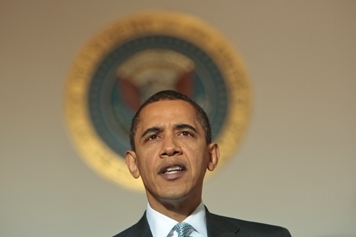
Fresh off his historic victory, President-elect Barack Obama prepares to enter office at a time of intense challenges facing the country. Weakness in the housing sector led to a significant credit crisis which reshaped the entire landscape of the financial industry. The government was forced to enact a comprehensive bailout plan and continued to work with banks and investment firms to improve their balance sheets. Obama inherits a domestic economy on the verge of recession (if not already in one), a global slowdown that threatens to hinder recovery for the foreseeable future, and a volatile stock market that has caused even the most experienced and patient of investors to rethink their strategies. His message of change and hope (and motto “eight years of failed Bush policies”) resonated with voters, though the time for action (and results) is drawing near.
That was Then, This is Now…
Today Americans are justifiably concerned for their jobs, their pocketbooks, and their investment (retirement) accounts. Obama will not have the luxury of time to bask in the glow of victory as the people will be looking to him to deliver on that message of hope and change. He will be tested early and often as Republicans begin planning for a “revolution” in 2010 (much like Newt Gingrich led in 1994).
From a market perspective, some investors remained concerned about Obama’s views on tax policy, particularly capital gains and corporate tax rates. Some are fearful that a Democratic president and Congress could enact legislation that harms the pocketbooks of the upper class (the country’s largest investors) and attempt to push through spending packages that further inflate the budget deficit. Others worry about the continued prospects for free trade in a global marketplace and predict that labor unions will gain power at the expense of Corporate America.
While these concerns create pessimism for the markets (even more than already exists), the optimists point out that many of these same fears existed in 1992. The Dow Jones soared over 200% during the Bill Clinton years, the strongest performance in the post World War II era. While no one dare predict comparable appreciation for the foreseeable future, the similarities of the times should lend some optimism for the investment markets. Congratulations, good luck, and let’s get to work, Mr. President.
The information set forth was obtained from sources which we believe reliable but we do not guarantee its accuracy or completeness. Neither the information nor any opinion expressed constitutes a solicitation by us of the purchase or sale of any securities. Past performance is not a guarantee of future performance.
RB Brounes & Associates 4607 BRAEBURN DR. ▪ BELLAIRE, TEXAS 77401 ▪ 713.962.9986 ▪ ron@ronbrounes.com