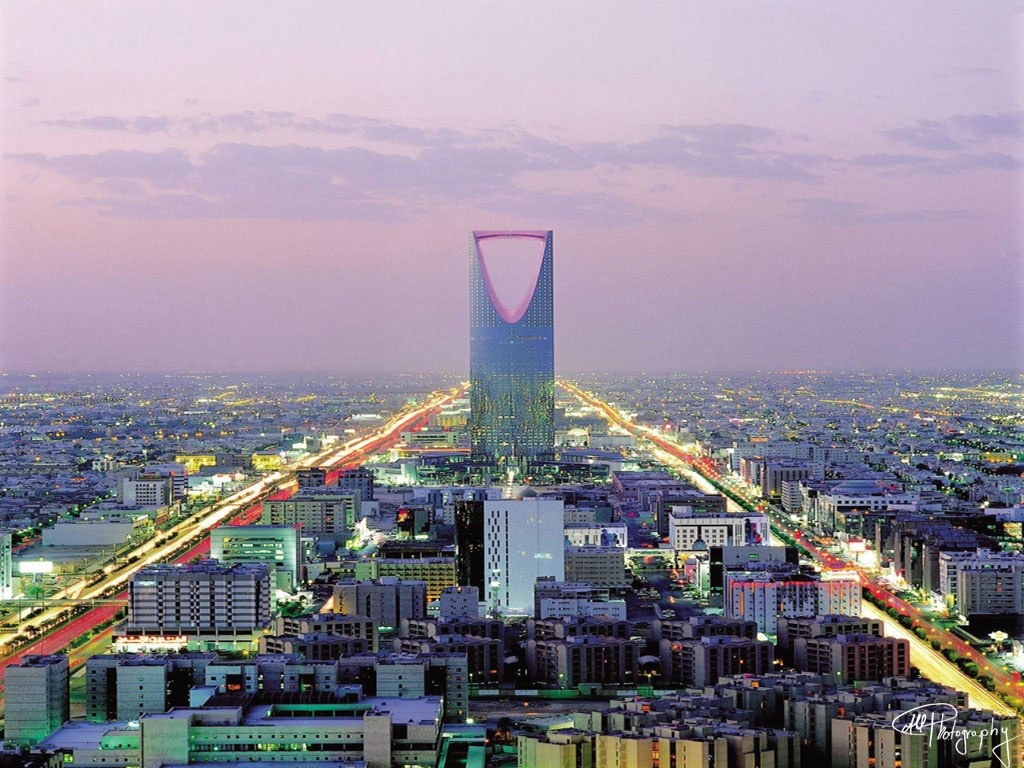

Saudi Arabia Employment and the Nitiqat / Saudization Program in a Global Economy
-
Posted in : Economics:
- On : Apr 02, 2013
Someone asked my opinion on the the Nitiqat or Saudization program.
This is a penalization and reward system in Saudi Arabia for companies based on the number Saudi employees and other factors.
As a good friend (who happens to be Saudi) once said, it is polite to not give opinions unless asked.
But as someone who cares about the country and sees potential, since I was asked, here are my humble observations:
First, taking decision making power from those actually creating jobs and putting it in the hands of politicians who do not create jobs it is likely a problem.
Some economic analysis indicates that the best role of government for economic development is minimal: stay out of the way and allow the people who create jobs do what they do best.
One universal law of government involvement in things (other than basic defense of life, property, contracts and borders) is the law of unintended consequences.
For example, already from Nitiqat we hear of some side effects:
– Companies making fake mergers and acquisitions of various divisions in order to meet thier quota.
– “No show” Saudi jobs where Saudi nationals are on the record books but don’t actually have a job (we should be careful of Saudization causing the nation to be similar to the New Jersey mafia and union/ mob construction jobs).
– Saudis hired only because they are Saudi and not due to qualifications who simply go through the motions of appearing at work, while never actually doing a job – in the worst cases, the hiring company is content to let them play video games all day, viewing the Nitiqat requirement of hiring them as a tax.
– Foreign and even Saudi companies who are moving operations to UAE and other more business-friendly regional environments.
– Companies reclassifying their workers in order to comply with the mandates and quota by moving them. For example, one high end company complied with Nitiqat instantly, how? They simply moved all top quality expats to UAE overnight. The result? A skeleton crew in Saudi which is 100% Saudi national but does not have the high-end technical expertise the expats had. Instead of learning and working alongside the expats, those Saudis are now alone in the cold and the Saudi branch of this company is now given only the lowest quality work rather than the higher end technical work which is all now sent to the Dubai office to be done by those sake expats who last year called Saudi home and spent money in Saudi.
– Thousands of Asian and other expats rounded up, jailed, forced to leave — this sometimes creates inefficiency and grinds some activities to a halt. In many cases, such as shopkeepers and drivers, there are not always even enough Saudis who even want the job to replace them— Result: good, skilled and cost effective labor that knew the market gone and replaced at worst with nothing, at best with a Saudi who does not have the interest, skill or experience in some cases to even do that job (and the employer is forced to pay far more for a Saudi so it is essentially a large tax). In the case of higher end technical jobs the problem is even worse, those jobs simply leave along with the expat, possibly never to return.
– Over 100,000 small businesses owned by Saudi’s targeted for punishment which could be very harmful– in the words from Arab News this week a Ministry of Labor spokesman said “No Saudi who owns a small business should be absent from the business.” This may not be ideal – this effort targets exactly the best area for potential Saudi growth: small businesses owned by Saudis. There is almost no doubt that 10,000 or more small businesses will be wiped out by the bureaucracy and central planning efforts with the gamble that a flow of Saudis will later fill those jobs and the businesses will re-open. Others will be harmed and ALL will be faced with regulations they feel add no benefit to their business. As a result: many if these businesses will fail and be destroyed by government action, this could harm the economy more and create an even wider gap between rich and poor. The net result may be more unemployed Saudis, not less. Anyone interested in real job growth should consider doing exactly the opposite: help, not harm the Saudi owned small businesses.
– Some foreign companies, who would have brought much needed jobs and expertise, have opted not to come to KSA as their MENA base – few companies, all else being equal, will choose KSA over UAE or another regional country when faced with the added burden of Nitiqat – why would they? We should ask: what competitive advantage Saudi offers over UAE? Unless the company is specialized and directly benefitting from government contracts or the energy sector etc., there are few advantages over other markets. This is unfortunate because as an economic analyst I love Saudi the most in the region and feel it has the most potential.
– Tens of thousands of independent contractor / freelance laborers forced to leave – guest workers from poorer Asian countries bring efficiency because they save time and money for Saudis to not need to drive themselves, clean etc. as they will without them – higher end expats bring expertise which is greatly needed here in KSA.
– We also see a cottage industry of people who seek to avoid these penalties such as paid informers who tell companies if there is an impending raid etc. – all of this citizen and government effort of cat & mouse is wasted economically and not productive because it produces no good or service of value, the basic need on an economy – in other words, much more corruption, not something Saudi needs.
These are just a few of the issues already cropping up from this program. What has been seen as a solution so far? More crackdowns, raids on businesses, more punishment etc. If thousands of small businesses go under and corruption radically increases and businesses who relied on low cost or highly skilled expats grind to a halt and fail, where will blame fall? What new regulation will be implemented to fix what is broken? Failures will likely be blamed on unforeseen complexities and the solution seen as more tinkering and a cycle of more regulation. Much of this will undo some of the great advances made by the King and the government as well as agencies tasked with attracting foreign investment.
Sadly, there are those who see some of the bullet points above as positives, not negatives. Expats moving to the UAE and going home? “Great”, they might say. It’s common in human history that those who legislated themselves to ruin, never knew along the way, the destruction they were causing.
For jobs to grow an economy needs to grow, this program will slow and harm growth.
The best job creators are business owners both small ones and the largest trading families. The major families know what they are doing, they KNOW their industries and the market and have already grown and created jobs.
What the Nitiqat effort essentially gambles on is that a tiny handful of politicians know what is best for growth over all the entrepreneurs and CEOs in the Kingdom. It is possible that they do not. Only the actual business owners know best what will grow their business and serve customers. It could be an unwise gamble to second guess them.
One should ask when this type of nationalized central planning ever worked in the human history of economics.
At the core of a robust economy is the exchange of goods and services produced for value. We should always be cautious of actions that distract from this both by spending effort, personel and dollars to enforce on the government side and forcing companies to spend effort, people and dollars to comply. We should ask: At the end of the day what is learned or gained? What value is created?
The worst in central planning becomes like the USSR where the politicians bred a class of citizen who had core competences of 1) beating the system through maneuvering, bribes and other methods above, 2) enforcing rules which add no value and which no one would pay for, therefor, by definition are not a useful or productive good or service 3) inefficient and (I’m sorry to say) lazy workers.
We don’t want to see such great Saudi progress reversed and have workers who who feel they are owed a “right” of a job based on nationality not skill or performance — these workers then are content to play video games or, in some cases, not even show up for work at all, all while earning twice the fair market rate and working under the belief that they cannot be fired. This is unfair to the many hard working and entrepreneurial Saudis and demoralizes them and in some cases makes them give up good, hard, ambitious jobs in exchange for cushy no-show or government jobs. (I know some of he most hard working and brilliant people I’ve met are Saudis in both public and private sector, this program and the result is a stain on their name). Trading families struggle to keep good Saudis because young employees may take the easy path of the artificial government backed jobs.
It may be far better for Saudi goals to have all those people doing something economically productive.
Additionally all of these efforts do not address the root issue that many Saudis simply do not want to work in these jobs.
Do we see Saudis who are vying for these jobs? Do we see a Saudi standing outside my hotel begging the manager for a job, any-job, to get his foot in the door? Are Saudis sending out 50-100 resumes and cold-walking door to door 8 hours a day pounding the pavement for a job?
The fact is, if someone is Saudi and male, he can have a job if he wants it. All the legislation in the world won’t change the desire to have that job.
The best way to change that desire is to create fulfilling, interesting jobs that people look forward to and which serve their basic human needs.
Solutions
1) Give flexibility to those creating jobs – look at the great trading families and ambitious smaller entrepreneurs and look at what has worked. Give them freedom to grow businesses the way they know is right.
2) Increase options and economic freedom – one of the great areas of progress in recent efforts is the new employment from the success of allowing women to work in lingerie stores – this was not the type of government action where companies were told by the State what a politician thought would cause growth: it is the opposite, it was where MORE freedom and less restriction allowed growth – this was great work by the Ministry of Labor and others involved.
3) Look at countries in the world with central planning such as communist countries and those with economic freedom and see what has worked — look at examples of those countries where heavy government intervention has occurred and see the results – scientifically its likely that an alternative approach would have the best chance of working and those efforts focused on more freedom and less regulation will be those which succeed.
4) Use the principles of free market economics to spur growth and focus on the most positive opportunities. Ask companies what roadblocks are preventing growth and remove those roadblocks. Add no new hindrances.
5) Work on cultural issues that prevent desire of some Saudis to have such jobs (this is helped by having fulfilling jobs, the opposite of no-show jobs).
6) Recognize that we are in a global economy, isolation and protectionism have major disadvantages , it is a competitive global world – Saudi has made great advances in global competitiveness, it would be a shame to destroy this momentum.
7) Focus on strength and what has been effective – all countries need improvement – don’t harm things that already work, strengthen them – trust in the successful small business owners, trading families and yes, even expats. Look to great companies like SABIC and ARAMCO and leading trading families who have been successful at training and employing Saudis.
For example, the international scholarship program is outstanding
I believe this is very risky, it may indeed increase corruption, decrease efficiency, harm the economy, destroy jobs and ultimately contribute to instability. Having studied emerging market economies for 20 years, the Gulf for many and having come here for many years there is almost nothing that concerns me more about Saudi Arabia. I believe it could be economically disastrous and the only way to right this will be to reverse it once it fails rather than doubling down on further gambles with more laws and regulations.
Thank you.
In case anyone reading this doesn’t know me, I’m a tireless defender of Saudi Arabia, you can search for my TV appearances and articles to this effect. I also have no personal disadvantage from Nitiquat, I’m not employed in Saudi and unaffected personally– so I am not criticizing because I dislike the Kingdom, on the contrary I only criticize because I was asked my opinion and because I care so much and see so much potential for this great country that I’ve grown so fond of. I also don’t mean any offense to Saudis involved in the process. In my home we often speak frankly and in a way that might be considered offensive on matters of economics and politics. My intent is not to offend anyone.
There are indeed a great many efforts by those in Saudi Arabia which are good economics. There are many things also underway which can lead to improved economics.
I’m always happy to speak to any group, organization or person in Saudi Arabia about how freedom and free markets work and how the principles of solid economics present solutions.
– Bruce Fenton