

Jeffrey Ornstein on Middle East Hotel Design
-
Posted in : Business:
- On : May 26, 2009
“The Hotel Design Leaders of the Next Decade will be Cultural Spies,” Jeffrey Ornstein, CEO, J/Brice Design International, Boston, MA & Dammam, Saudi Arabia
The Middle East is redefining the luxury hotel experience for the world traveler.
“The emergence of the Middle EAst as leader, rather than follower of European and American neo-modernist themes converges with a new ultra-high-end guest who has a global perspective and expectations that far surpass any that can be met by Western standards,” says Jeffrey Ornstein, CEO and founder of J/Brice Design International based in Boston, MA and Dammam, Saudi Arabia.
Industry observers see Ornstein’s work as vital to establishing the Middle East as the new world-leader in hospitality design. His themes often incorporate Arabian motifs with Asian and European influences to create a never-before seen-esthetic in the luxury hospitality sector.
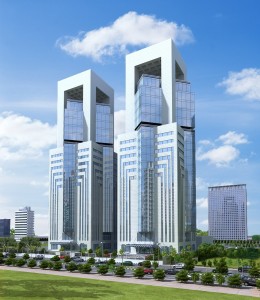
As a result of his vision, J/Brice (www.jbricedesign.com) was named designer-of-record for the iconic Aspire Tower — Doha, Qatar’s answer to the sail-shaped Burj al Arab that branded the city of Dubai. The royal families in the Middle East are diversifying oil wealth and investing in infrastructure and real estate, including of course hotels and resorts. When they asked J/Brice Design to create luxury properties in the Arabian Gulf and Indian Ocean, they also urged the firm to push the limits of luxury. “They want us to help them define a new World Standard that will attract and exceed the expectation of the new traveler to region. Indeed, we are now creating the interiors of Doha, Qatar’s iconic Aspire Tower that will define this city as much as the sail shaped Burj al Arab defines Dubai,” explains Ornstein.
The firm, which celebrated its 20th anniversary, is currently creating designs for a new property in the Saudi Arabian oil-rich province of Al-Khobar. The hotel Middle East hotel experience, according to Ornstein, “has to resonate with guests as diverse as fashion models from France, cattle barons from Uruguay or CEOs from North America. It comes down to this: guests, who arrive on their own Gulfstream, expect their hotel experience to exceed their homes and private jet. This guest must be awed.”
The Hotel that Branded a City
The Middle East captured the world hospitality industry limelight with the opening of the sail shaped Burj al Arab that put the city of Dubai, UAE on the map. Ornstein observes, “The property exceeded expectations with its sleek poetic shape and high fashion, luxury mystique. It actually established Dubai as a global brand with as powerful an icon as the Eiffel Tower is for Paris.”
Working in the Middle East offers challenges. “We have to meet guest demand for fresh new ideas all the time. We are creating unique and distinctly separate experiences for the guests of the Uber-Modern Aspire Tower and English Classic Hotel Khalifa in Doha, Qatar. The bold and inventive styles we are creating there are setting the benchmark for future developments we are managing in other Qatari locations as well as Bahrain, The Saudi Kingdom and the region’s newest hot spot, Zanzibar.”
How does a designer stay at the vanguard of creativity? Notes Ornstein, “Real inspiration must be drawn from our cultural, geo-political and economic environment. Those of us who want to remain hospitality industry leaders, have to read the people we serve and place them – not the hotel — at center stage. We must be guest-centered rather than hotel- centered. Just as memorable clothing fashions draw inspiration from people and society, we as hotel designers should think of ourselves as being, not in the hotel design business, but in the hotel fashion business.”
He adds, “The concept of hotel design as hotel fashion began to develop when I addressed Heimtextil, the renowned international fabric show in Frankfurt Germany. There I coined the term ‘Cultural Spy’. Indeed the designer as Cultural Spy underscores our belief that true inspiration comes from society – the guests our clients serve and want to serve. The term ‘Cultural Spy’ resonated with the international audience of designers, architects, textile manufacturing executives and hospitality industry leaders. It succinctly emphasized how important it is for the hotel designer to take in everything about society – from popular culture — such as movies, fashion, music and cuisine – to the fine arts as well as shifting economic centers, political winds and social tensions.”
Being a ‘cultural spy’ is at the heart of the J/Brice Design philosophy. Ornstein points out, “We are now restoring the luxurious RMS Queen Mary that first sailed in 1934. We are not simply bringing this magnificent ocean liner-cum-hotel and popular wedding venue in Long Beach, California back to its original Art Deco era splendor as if it were a museum. We are instead focusing on what a 21st century guest with contemporary expectations wants and recreating the romance – of luxury travel during in Hollywood’s Golden Age. Similarly, we read the guests who visit the Muse in New York and established This Times Square property as the sought-after hip-hop boutique hotel in Manhattan and the in place for music industry glitterati.”
From Hotel Design to Hotel Fashion
Looking to the future, the iconic hotels of the 2010-decade will be created by designers who recognize and then interpret cultural shifts, with the focus on the guests and their lives. The designers are getting support from owners who recognize the importance of making their hotel environments relevant to their guests’ lifestyles and culture.
Editorial note:
Jeffrey Ornstein’s J/Brice Design International (www.jbricedesign.com) is responsible for the design of Royal Family owned hospitality projects in Qatar and Saudi Arabia, as well as other luxury developments in Bahrain, Zanzibar, whose total construction costs exceed 1.2 Billion USD. Th firm is a preferred design group for Hilton Hotels including its Full Service, Corporate and Franchise properties, inclusive of all Hilton, Doubletree Hotel and Guest Suites, and Hampton Inn brands, Marriott International / Renaissance Hotels, Trump International Beach Resorts and Starwood – including Sheraton, Westin, and 4-Points, Best Western and Intercontinental Hotel Group.
In addition to the Aspire Tower, the firm’s International credentials include work for TAJ Hotels, Independent Boutique Hotels in Dubai, The Khalifa Hotel in Doha, Qatar, and currently the Al-Khobar Hotel and Towers in The Kingdom Saudi Arabia.
great post =) thanks.